Holiday & Christmas Lighting Electrical Safety in Austin, TX: What Homeowners Need to Know
The holiday lights are going up across Austin's neighborhoods — from Steiner Ranch to South Congress. But every November, we get calls from homeowners who tripped a breaker, found a scorched outlet, or discovered that their outdoor strands weren't rated for Texas weather. Here's what to check before you plug in the first strand of lights.
Why Holiday Lighting Is an Electrical Hazard (More Than You Think)
According to the U.S. Fire Administration, roughly 160 home fires start from Christmas tree lights and decorative lighting every year. The real number is higher when you account for fires that start from overloaded extension cords and outdoor outlets — common causes that often get misclassified. The good news: almost all of these fires are preventable with a few basic checks.
Texas homes have a specific challenge. Our mild winters mean outdoor outlets often go months without use — and that's exactly when weathered wiring, degraded GFCI protection, and corroded connections create the most risk. By the time you're pulling extension cords out of storage in November, you're working with equipment that hasn't been inspected since last January.
- Breakers that trip repeatedly when holiday lights are on
- Outlets that feel warm or hot to the touch
- Flickering lights when decorations are running
- Burning smell near outlets or extension cords
- Extension cords that get hot along their length
Any of these is a reason to stop and call a licensed electrician before continuing.
Step 1: Know Your Circuit Capacity Before You Start
The most common mistake we see is homeowners who don't realize how much load holiday lighting adds to a single circuit. Here's the math: a standard 15-amp household circuit can safely carry about 1,800 watts (80% of its 2,250W maximum, per electrical code). That sounds like a lot, but consider what's already on that circuit.
In most Austin homes, the outdoor GFCI outlets on the front and back of the house share a circuit with at least a few indoor outlets — often in the garage or a nearby room. If that circuit is already running a garage refrigerator, a space heater, or a patio heater, you may have very little headroom left for holiday displays.
| Display Type | Approximate Wattage | Notes |
|---|---|---|
| Traditional incandescent string lights (100-count) | 40–50W per strand | Add up fast with large displays |
| LED string lights (100-count) | 4–7W per strand | 90% less energy than incandescent |
| Inflatable yard decoration (6–8 ft) | 45–150W each | Motor draws continuous load |
| LED projector/laser display | 10–30W | Efficient option for wide coverage |
| Rope lights (25 ft, LED) | 15–25W | Good for outlines and borders |
| Outdoor floodlight (LED) | 20–50W each | Common for architectural uplighting |
The shift to LED lights has made large displays much more manageable — a full roofline of LED strands can draw less power than a single old-style incandescent display. If you're still using incandescent lights, this is a great year to make the switch. The safety improvement is significant, and you'll see it on your electricity bill too.
Step 2: Check Your Outdoor Outlets and GFCI Protection
Every outdoor outlet in Texas — and any outlet within 6 feet of a water source — is required by code to be GFCI-protected. GFCI (Ground Fault Circuit Interrupter) outlets sense tiny differences in current flow that indicate a ground fault and cut power within milliseconds, preventing electrocution. Before you plug in a single strand of lights, test your outdoor GFCI outlets.
- Plug in a lamp or phone charger and turn it on.
- Press the small TEST button on the outlet face.
- The device should lose power immediately.
- Press RESET — the device should come back on.
- If the outlet doesn't cut power during the test, or won't reset, the GFCI has failed and needs to be replaced.
GFCI outlets don't last forever — most have a 10–15 year lifespan, and Texas heat accelerates wear. If your home is more than 10–12 years old and you've never replaced the outdoor GFCI outlets, they're due. Replacement typically costs including parts and labor, and it's one of the best safety investments you can make heading into the holiday season.
Step 3: Use the Right Extension Cords Outdoors
Not all extension cords are created equal, and using an indoor cord outdoors is one of the most common holiday electrical mistakes we see. Indoor extension cords lack the weatherproof insulation that outdoor cords have — exposing them to Austin's December rain and dew can degrade the insulation, create ground faults, and start fires.
What to Look For on an Outdoor Extension Cord
- Letter "W" on the cord jacket — indicates weather-resistant (e.g., SJTW or SJTW-A designation). Look for this marking on the cord itself.
- 3-prong plug — the grounding prong is essential for outdoor use
- Correct gauge for your run length — use 16-gauge for runs under 50 feet, 14-gauge for 50–100 feet, and 12-gauge for longer runs. Undersized wire overheats.
- UL or ETL listed — certification means the cord has been independently tested
Also: don't run extension cords under rugs, through doorways, or staple them to surfaces. All of these trap heat and damage insulation. Extension cords are temporary solutions — if you find yourself running extension cords every year because you don't have enough outdoor outlets, that's a sign it's time to add a dedicated outdoor circuit.
Step 4: Inspect Lights and Decorations Before Use
Before stringing a single light, pull out all your stored strands and decorations and do a visual inspection. Holiday lights spend most of the year in attics and garages — hot, humid environments that degrade insulation, corrode connections, and crack wire jackets. What looks fine in December may have been damaged by months in a 120°F attic.
- Check for cracked, frayed, or brittle wire insulation — discard any strand with visible damage
- Look for broken or missing bulbs on incandescent strands — these create open circuits that concentrate heat at other points
- Test each strand before hanging it — if it doesn't light fully, don't assume it's just a bad bulb
- Check plugs and sockets for corrosion or discoloration — brown or black marks indicate heat damage
- Don't exceed the manufacturer's stated number of strands connected end-to-end — typically 3 strands for incandescent, more for LED
Holiday lights are not expensive enough to risk a fire. If a strand is more than 5–7 years old, has any visible wire damage, doesn't light correctly, or was stored in a hot attic for years, replace it. A new 100-count LED strand costs . A house fire costs everything.
Permanent Holiday Lighting: The Cleaner, Safer Option
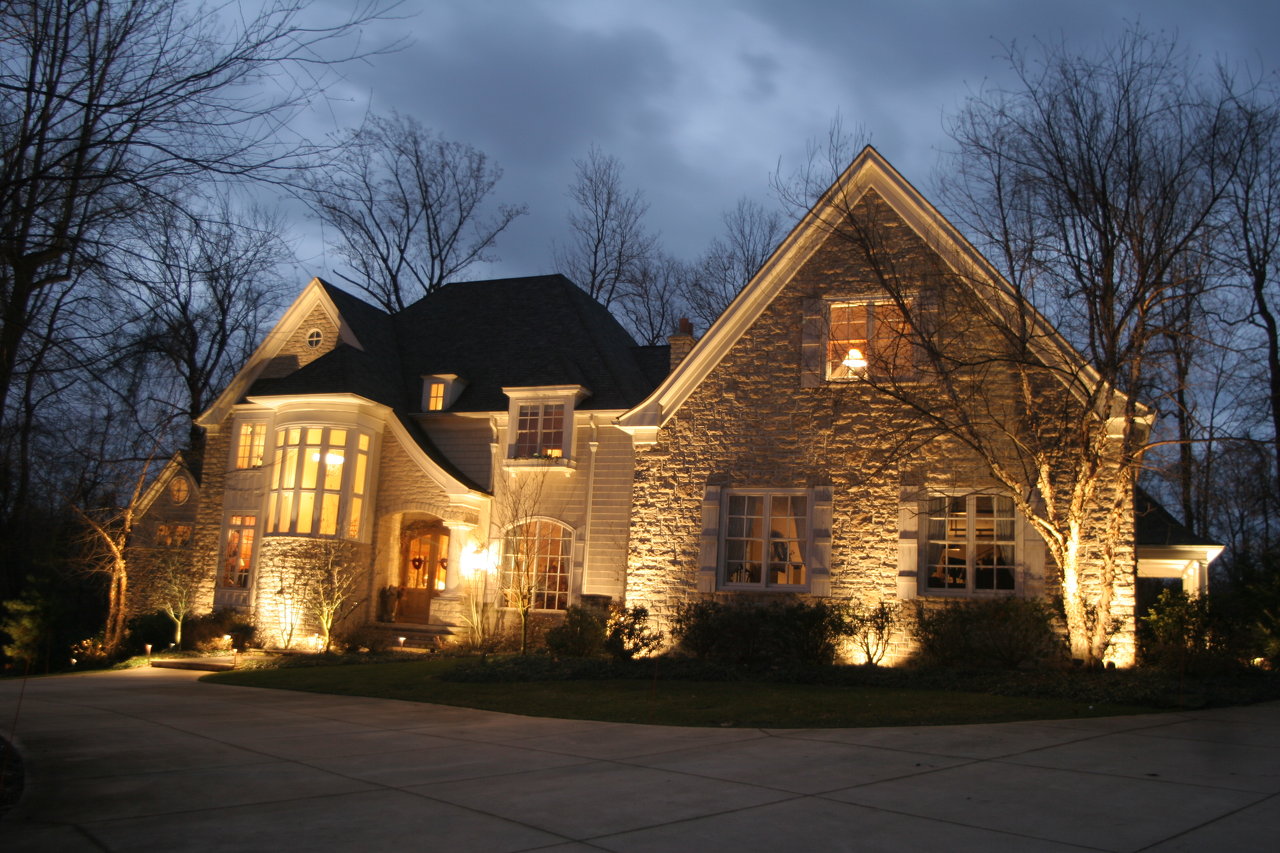
More Austin homeowners are moving away from the annual ladder-and-staple routine in favor of permanent soffit lighting — LED fixtures professionally installed under the roofline that can be programmed for any color or pattern. In the holiday season they run as Christmas displays; the rest of the year they're subtle architectural uplighting or turned off entirely.
Permanent holiday lighting systems like Trimlight and similar brands are wired directly into your home's electrical system by a licensed electrician, with a dedicated outdoor circuit. This eliminates extension cords, reduces fire risk substantially, and means no more climbing on icy roofs in December. Installed cost typically runs ,500–,000 depending on the size of your home and the system chosen, but many of our customers say it pays for itself in convenience and peace of mind within a few years.
When to Call an Electrician Before the Holidays
Some holiday electrical issues are clearly DIY-safe: replacing a worn extension cord, swapping incandescent strands for LED, or testing and resetting a tripped GFCI. Others call for a licensed electrician. Contact us if:
- Your GFCI outlet fails the test or won't reset after pressing the button
- Breakers trip when you plug in holiday lights — even once
- You notice outlets that feel warm, spark, or smell burned
- You want to add a dedicated outdoor circuit for holiday or permanent lighting
- Your home is more than 20 years old and hasn't had an electrical inspection recently
- You're interested in permanent holiday lighting installation
We're a licensed electrical contractor serving Dripping Springs, Austin, Lakeway, Bee Cave, and the surrounding Hill Country. TECL #28315. We can usually get out for a pre-holiday safety inspection within a week or two, and we're available for same-week appointments on urgent issues like failed GFCIs or tripping breakers.
Quick Holiday Electrical Safety Checklist
- ✅ Test all outdoor GFCI outlets (press TEST, verify power cuts; press RESET)
- ✅ Inspect all stored lights for cracked wire, damaged plugs, or corroded sockets
- ✅ Verify extension cords are rated for outdoor use (look for "W" in wire designation)
- ✅ Calculate total wattage to stay under 80% of circuit capacity (1,440W on a 15A circuit)
- ✅ Don't connect more than 3 incandescent strands end-to-end (or follow manufacturer limit)
- ✅ Use LED lights where possible — safer, cheaper to run, and cooler
- ✅ Never run cords through doorways, under rugs, or staple to surfaces
- ✅ Use outdoor-rated timer or smart plug to shut displays off automatically at night
- ✅ Turn off all holiday lights when you leave the house or go to bed
Frequently Asked Questions
Can I add an outdoor outlet myself for holiday lights?
In Texas, any new outlet installation that requires running wire from your panel or adding a circuit must be done by a licensed electrician (TECL license required). Running new outdoor circuits without a permit is a code violation and can void your homeowner's insurance. The good news: adding one or two outdoor outlets is typically a half-day job for an electrician and costs depending on how far the run is from your panel.
How many strings of LED lights can I safely connect together?
Check the manufacturer's spec sheet — most LED light strings allow 40–50 strands end-to-end because of their low wattage per strand. This is a major advantage over incandescent, where 3 strands is typically the safe limit. That said, always verify the specific product: cheap, uncertified imported light strings sometimes have wiring that doesn't match the label. Stick with UL or ETL listed products and follow their stated limits.
My breaker keeps tripping when I run holiday lights. Is that dangerous?
A tripping breaker is the circuit protection doing its job — but it's also a clear signal that something is overloaded or there's a fault. If it trips repeatedly, don't just reset it and try again. Either you've overloaded the circuit (reduce the load) or there's a wiring fault that needs to be diagnosed. Breakers that trip repeatedly and then get reset repeatedly can fail in the "on" position over time, meaning they won't protect you when needed. Call an electrician to diagnose the cause.
Do I need to turn off outdoor holiday lights when it rains?
Outdoor-rated holiday lights (UL or ETL listed for outdoor use) are designed to handle rain. However, extension cord connections — where the end of one cord plugs into another — are not watertight. Keep those connections off the ground and elevated during rain, or use weatherproof cord covers at connection points. If you're not sure whether your lights are rated for outdoor use, check the package; if you've lost it, look for "outdoor" or "suitable for use in wet locations" molded into the plug body.
How much does permanent holiday lighting cost to install in Austin?
Permanent LED soffit lighting systems typically run ,500–,000 installed for a standard Austin home, depending on linear footage of roofline and the system selected. This includes a dedicated outdoor circuit, professional installation, and the controller/app. Most systems come with a 2–5 year warranty on hardware. We install several of these systems each fall and can provide a free estimate — call us at (512) 547-4130 or reach out through our contact page.
Need a Pre-Holiday Electrical Inspection?
We serve Austin, Dripping Springs, Lakeway, Bee Cave, and the Hill Country. Licensed electricians (TECL #28315) available for safety inspections, GFCI replacement, outdoor circuit additions, and permanent holiday lighting installation.